8:00am : 100:00pm Mon-Sun
 101 E 129th St, East Chicago, IN 46312, US
Why Does My Circuit Breaker Keep Tripping in Malaysia?
October 27, 2026

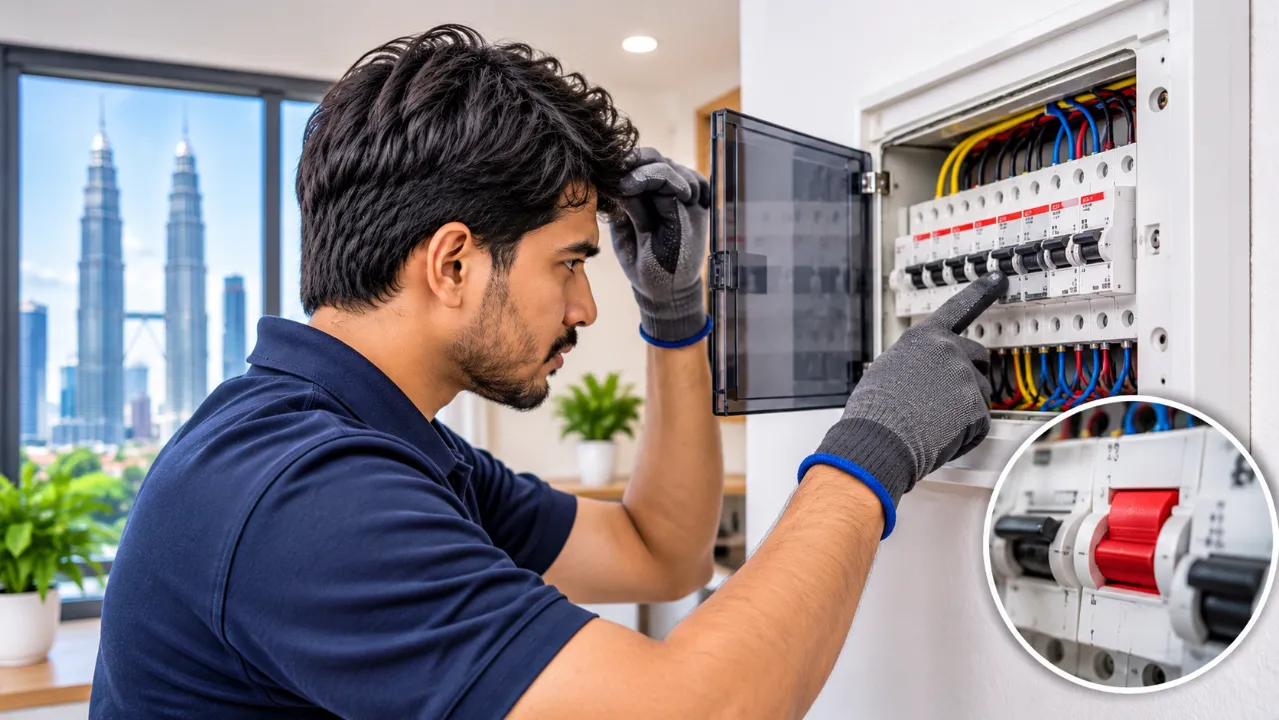
Your circuit breaker trips frequently in Malaysia due to the need to protect against an overload, a faulty appliance, a short circuit, earth leakage or a worn circuit breaker. Set it back one time when switching off appliances. Should it trip again or when it trips without any plugs, STOP and call in a qualified electrician.
If the breaker trips one time after a storm, it is generally not a problem. If the breaker continues to blow, something is wrong. The breaker is giving you a message: It is interrupting the power before a fault can cause damage to the wiring or fire. The task is to identify the fault that it is shielding you from, while not opening things that you shouldn’t touch.
This is a guide to be used by homes in Kuala Lumpur, particularly condos, where the distribution board (DB box) is typically located in a store room or close to the entrance. It includes safe checks that you can perform on your own, and when to call an electrician.
What tripped points you look at. An MCB can be used to protect a circuit from short circuit and overload. An RCD or ELCB is designed to safeguard against earth leakage on multiple circuits. The main switch shuts off all the power. Record which switch was switched and what was operating, as this information will help you to identify the problem in one particular circuit or appliance.
A mini circuit breaker (MCB) is a safety device used to protect one circuit, such as kitchen sockets and/or aircon, from overload and short circuit. When a residual current device or ELCB (RCD/ELCB) is activated by an earth leakage fault, the fault may have occurred in a damaged appliance, wet wiring or worn insulation, and the ELCB will cut power to a larger area. The main switch is a power one.
The pattern is better than the trip. A lightning strike to a short circuit. After a few minutes, a trip indicates overload. Water in wiring/fittings indicated by a trip in rain. No plug means it is wired, in a socket, or to a breaker. Record the time, weather conditions and type of electrician’s work being performed.
| Trip pattern | Most likely cause | First safe action |
| Trips instantly on reset | Short circuit or wiring fault | Leave it off, call an electrician |
| Trips after a few minutes | Overload | Spread the load, test one appliance at a time |
| Trips only in rain | Water in wiring or fittings | Keep it off until dry, find the water source |
| Trips with nothing plugged in | Wiring, socket, or breaker fault | Stop resetting, call an electrician |
| Trips when one appliance starts | Faulty appliance or its circuit | Test that appliance on another circuit |
The seven causes are: overload, faulty appliance, short circuit, earth leakage, loose or corroded connections, worn breaker, outdated or overloaded DB box. The two most common causes of overload and the most easily testable are also the easiest to test safely. When shorting out, earth leakage or wiring faults occur, that is a fault within the wiring or fittings which should not be opened up, it is a job for the electrician.
1.Overload: Too many devices on a circuit; such as a water heater, iron, and washing machine on a circuit, or multiple heavy appliances on an extension cord.
2.Faulty appliance: When the heater element is damaged, a frayed cord, or water in an appliance allows it to leak current and/or draw too much current, causing the circuit breaker to trip when it is in use.
3.Short circuit: A live wire comes into contact with a neutral wire, usually as a result of the insulation becoming damaged, a nail, drill through a cable or a faulty fitting. This causes the breaker to trip off, instantly.
4.Earth leakage: Nowadays, escapes to earth are mostly via water, badly installed insulation or an appliance fault. This is what an RCD (electrical circuit protection device), or ELCB (electrical low voltage circuit interrupter) is designed to prevent and is a shock hazard.
5.Loose or corroded connections: Heat cycles, age, and inadequate past work relax terminals. A loose connection will overheat, break down insulation and trigger intermittent trips, which are difficult to find without testing.
6.Worn breaker: Breakers wear out. A random tripping breaker, without any or very little load can be just as much a fault as a true overload.
7.Old or overloaded DB box: Homes from the past and refurbished homes may have a different number of appliances installed than was originally designed for the circuit. If all the circuits are already in use, then regular operation will cause breakers to trip and the board should be evaluated.
Turn off appliances, reset, then turn on appliances one by one. Next, check the suspect appliance on a different circuit, go to check for water, to check what happened recently and the use the DB box switches to isolate the circuit. Never open the DB box cover, switch a breaker or touch any wiring during these operations.
Step 1: Turn off and then reset once. Turn off equipment on the tripped circuit, and then reset the breaker once. If it is on, turn the appliances one by one, allowing a few seconds between each turn on. The appliance that caused the problem again is the suspect. A breaker which trips back should NOT be reset continually.
Step 2: Distribute the weight. A breaker that trips during a combination’s operation but not during its individual appliances’ operation is overloaded. Replace one appliance on a different circuit, and don’t use the hot water heater and washing machine at the same time on the same circuit. If they’ve got to do a lot of cycling daily to ensure there’s power available, then the circuit requires attention.
Step 3: Test Appliance in Question at another location. Test it out on another socket in another room on another circuit. If it also trips that circuit, the appliance is defective, and discontinues use. If it is OK there, the problem is either in the original circuit or in the original socket; make note of both to give to the electrician.
Step 4: Humidity and rain are common RCD causes in Kuala Lumpur. Check for a leak near the DB box, a socket, or light fitting, aircon condensate leak, wet washing machine or heater, wet outdoor socket, or damp patch around a switch. Never touch or reset any electrical article while it is wet or until the cause of the wet condition is corrected.
Step 5: Review the changes that took place recently. Rarely, breakers trip for no reason. Check if a new device has been installed, particularly a water heater, A/C, oven, or induction hob, if renovation work has been done near the cables, or if an extension cord or socket outlet has been installed. Gamblers with that start to the week’s work have cut down the field to one circuit.
Step 6: Only use the switches. Ensure that all appliances are switched off, then switch off all MCBs and reset RCD or main switch and then switch MCB to one at a time. The circuit is faulty that switches on the RCD again. Only use the front switches. Do not take off the DB box cover.
Step 7: and STOP. The majority of RCDs feature a TEST button that the user can press. Pressing it should trip the RCD. If it doesn’t trip, it could be a problem with the protection, so switch the circuit off and contact an electrician. If it trips normally, the RCD is operating normally and the fault is on the circuit isolated in Step 6.
If the breaker trips without hesitation every time, if it trips with all the things unplugged, if the breaker is hot, smoky, or smells of burning, if the lights flicker throughout the house, if there is water in the DB box, or if the breaker trips with any of the above, STOP ALL DIY checking and contact a licensed electrician. Turn the affected circuit off and keep it off and don’t force it back on.
These are not “try one more reset” situations! Any faults within walls and DB boxes are not visible from the outside. If a breaker doesn’t hold, then it is for a reason, and it is an on-going stress on the wiring, it is concealing the problem, and it is hot.
The worst errors are keeping a breaker on, installing a larger one, bypassing the ELCB/ RCCB, opening up the DB box cover, and putting everything on one extension lead. Every fault causes one unit to trip, and every error results in the loss of insulation (but not of the fault that caused the trip).
Never tape, wedge or hold a breaker in the “on” position. If a breaker fails to trip, then it can’t protect you.
Never install a higher-rated breaker in a circuit. The rating is identical with that of the wiring. Higher rating means that wiring can overheat before anything trips.
Do not allow any individual to bypass the ELCB or RCCB to “restore the power. Bypassing does not provide shock protection. If someone says this is a solution, say no and seek another opinion.
Never open the DB box cover, or remove the socket faceplates to peer into, unless you are qualified. Parts within remain live when one breaker is off.
Don’t dismiss tripping that only occurs when it rains. The pattern suggests water in wiring or an outside fitting; the worse the pattern, the more likely it is to be water in wiring or an outside fitting.
Never use a single extension cord to make up for a tripped circuit. You are changing the overload size to a smaller cable.
In Malaysian homes, aircon and water heaters are the two appliances most often behind tripping, and monsoon rain plus aircon condensate leaks are the water sources that are usually missed. An aircon that trips its circuit usually points to a compressor issue, outdoor unit fault, or some kind of shared circuit problem. A water heater that trips the RCD usually has leakage, often tied to the water line, or a worn element that’s not doing its job properly.
If the breaker trips only when the aircon starts, try the aircon by itself on its own circuit. If it still trips, then the aircon or its circuit needs checking, not just a reset. Compressor and refrigerant faults are technician work, not DIY work, so please don’t keep testing by turning things on and off. For water heaters, a trip after a shower, or when the heater is switched on, especially if there’s damp nearby, is a strong hint for leakage. Switch that circuit off and don’t keep resetting it, just because it comes back.
Condo homes add one more pattern: lots of small electronics on one circuit can each leak a tiny current, and together they reach the RCD trip level even when no single device is truly the culprit. If the tripping looks random, write down everything that’s plugged in, so the electrician can sort cumulative leakage from one specific fault, instead of guessing.
A solid diagnosis tells you which circuit trips, and under what load, then it runs insulation testing on that circuit, checks sockets , and looks at the DB box connections. Next it separates the circuit from its appliances, so you can sort out whether the fault is in wiring or in something that was plugged in. Real prevention is easier: label each circuit, keep heavy appliances more or less evenly spread across circuits, and check the DB box every month for scorch marks, a faint buzzing, damp spots, or unusual heat.
If the breaker itself is faulty, it gets swapped for the correct rating , not a larger one. Ask the electrician to tell you what tripped and why, in plain words, before any work begins, and ask them to confirm the diagnosis first plus the repair prices separately. One single faulty appliance should not turn into a full rewiring bill. Also , check the DB box monthly, and take a calm day to learn exactly where the main switch is, not when it’s dark and you’re rushing.
Because it is cutting power to stop overload, or maybe a faulty appliance, a short circuit, earth leakage, or even a worn breaker. Try to note which breaker tripped and what was running , then go through the safe steps above yeah.
Then the fault is in the wiring, a socket, or the breaker itself, not really an appliance. A short circuit or damaged insulation can trip a breaker with zero load, so leave that circuit off and call an electrician, don’t just keep trying.
The trip is basically the protection doing its job, but repeated tripping can be risky. Especially if it is a short circuit or earth leakage. If you smell burning , see heat or scorch marks, or it trips instantly, stop and call an electrician the same day.
An electric trip means a safety device, like the MCB or the RCD/ELCB inside the DB box, has cut the power after detecting overload, a short circuit, or leakage. In Malay people often say “elektrik trip” or “bekalan elektrik terputus”.
Usually it is an overload, or a fault in the aircon circuit , or a struggling compressor. Sometimes the circuit is shared with other heavy appliances. Try switching on the aircon alone on its own circuit. If it still trips then it likely needs proper checking.
Water heaters pull high current and they sit in wet zones so a worn heating element or leakage commonly trips the RCD. If it trips after using the heater, switch that circuit off and get the heater plus the circuit checked.
Yes, but only once, after switching off the appliances on that circuit. If it stays on, turn appliances back on one at a time. If it trips straight back, stop and call an electrician.
Yes, often. Older wiring, older breakers, loose connections, and circuits planned for fewer appliances all raise the chance. Renovations that add more appliances without adding circuits make it even worse too.
A tripping breaker is not the problem. It is the warning that a problem exists, and the pattern tells you what kind. Spread heavy loads across circuits, test one appliance at a time, check for water before you reset, and never bypass or force a breaker that will not stay on. When the trip is instant, happens with nothing plugged in, or comes with heat, smell, scorch marks, or buzzing, switch that circuit off and leave it off.
If you have worked through the safe steps and still cannot find the cause, or if any stop sign above applies, contact MYS Electrician Services through myselectricianservices.com and describe which breaker tripped, what was running, and when it happened.


Copyright © 2026 MYS. All rights reserved
WhatsApp us